
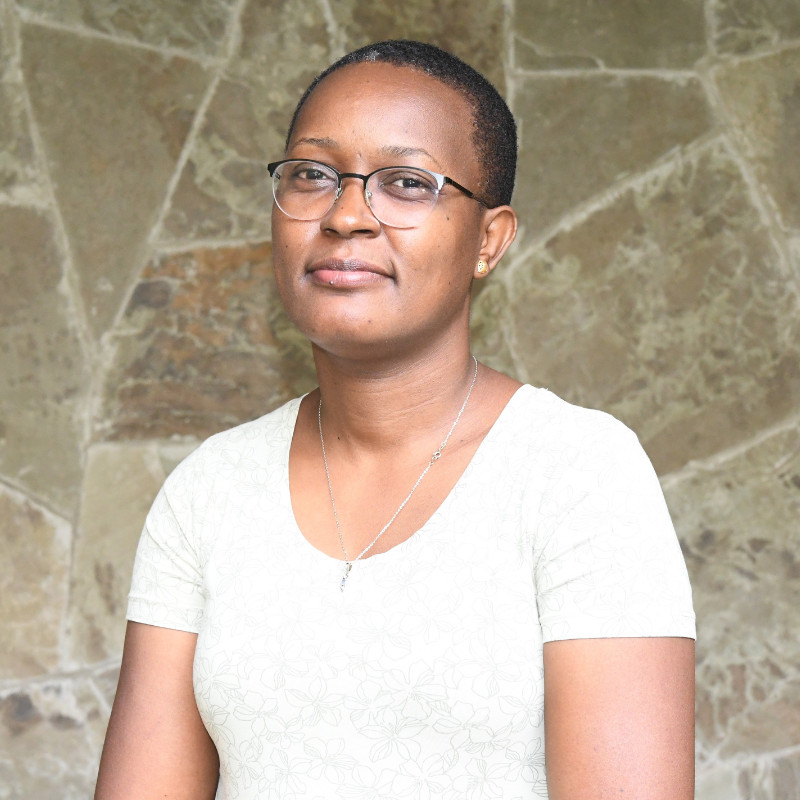
Researcher
Dr. Sophie Uyoga
Ag Deputy Director CGMR-C
KEMRI | Wellcome Trust
About
Sophie is the Ag. Deputy Director at the Centre for Geographic Medicine Research, Coast (CGMR(C). Sophie trained as a biochemist and later obtained a PhD in severe malaria epidemiology from the University of Heidelberg. She is particularly interested in understanding how red blood cell genetics influences susceptibility to severe malaria. In 2019, Sophie received Community and Public Engagement seed funding from the African Academy of Sciences DELTAS Africa programme. The project developed a child-friendly comic book, available in English and Swahili, to raise awareness of the social issues and challenges experienced by people living with sickle cell anaemia. Her Wellcome Intermediate Research Fellowship supports research on the prevalence and risk factors for alloimmunisation in children with sickle cell anaemia, with the potential to improve their management in Africa.
See moreCurrent Work
Her work focuses on red blood cell genetic polymorphisms, particularly hemoglobin S, alpha-thalassemia, glucose-6-phosphate dehydrogenase deficiency and blood group antigens. Her work also explores the effect of co-inheritance of these genes on the protection they each afford individually against severe malaria and other infectious diseases.
Her second area of research is on the development and treatment of severe anemia with focus on the impact of donor blood quality on recovery and survival post-transfusion. She is also investigating the prevalence, incidence and risk factors for alloimmunization among children living with Sickle cell disease (SCD) in Kilifi on the coast of Kenya. Alloimmunization is caused by the induction of antibodies to minor or variant antigens, typically within the Rh or Kell systems, on donor red blood cells, and is an important cause of intravascular haemolysis following subsequent transfusions. The on-going research will inform the development of better transfusion strategies for the management of SCD patients.
Survival of children with SCD has improved over the years due to better management and the availability of affordable management therapies as shown by the success of the hydroxyurea trial. In addition to the medical challenges of having to deal with access to healthcare, the disease is also associated with stigmatization of the affected families by members of community.
Sophie has interest in community engagement activities with patients and families affected by SCD. A seed grant for community and public engagement from the Africa Academy of Science (AAS) enabled Sophie and the team to highlight the challenges and successes that the affected families living with SCA experience. This resulted in a 32-page comic book that was developed in English and Swahili and has four stories that have drawn lessons and messages from the experiences of the patients and their parents. It not only provides facts about the disease but also gives hope for the patients as two of the stories are based on real life experiences of older patients.
Recent Publications
-
2026
Intravenous Artesunate in Artemisinin-Resistant Severe Malaria in Uganda
N Engl J Med. 2026; 394:2380-2382
- 2025
-
2025
Relation Between the Dantu Blood Group Variant and Bacteremia in Kenyan Children: A Population-Based Case-Control Study
J Infect Dis. 2025; 231:e10-e16
-
2025
Comparing HemoCue(R) and Quantitative Buffy Coat(R) and Coulter Counter-measured haemoglobin concentrations in African children with acute uncomplicated malaria: a Bland-Altman analysis
Malar J. 2025; 24:77
-
2025
Plasma folate dynamics in Plasmodium falciparum-infected African children treated with artemisinin combination therapy and single low-dose primaquine or placebo
Malar J. 2025; 24:342