
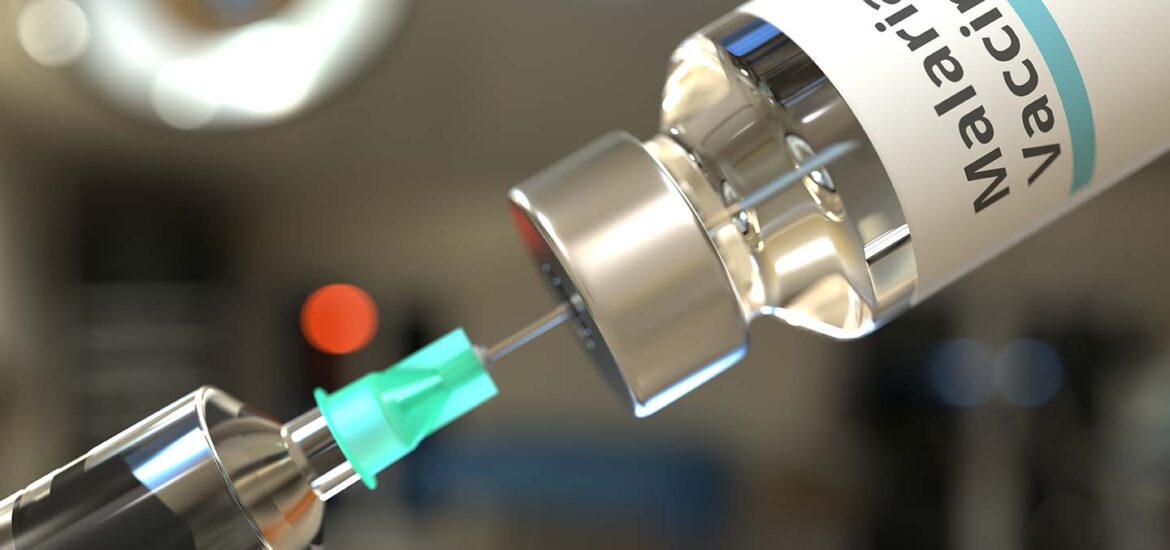
Global Consortium Launched to Develop Next-Generation Malaria Vaccine
A new international consortium has been established to advance the development of a next-generation malaria vaccine that aims to extend the protection against malaria and help lead to future efforts to eliminate it by targeting multiple stages of the parasite’s life-cycle.
The 2nd Generation Malaria Vaccine Consortium (MVC-2G) will be co-led by Professor Angela Minassian at the University of Oxford, and Associate Professor H. Magloire Natama at the Institut de Recherche en Sciences de la Santé – Clinical Research Unit of Nanoro (IRSS/CRUN) in Burkina Faso. Funded by the European Commission EDCTP3 for five years, it brings together nine leading research institutions from Africa, the European Union and the UK, with support from the Serum Institute of India (SIIPL), to optimise a next-generation multi-stage malaria vaccine. This aims to extend the protection against malaria by shielding against the blood-stage of the parasite, therefore creating a powerful second line of defence in young children.
The MVC-2G vaccine candidate will build on the success of SIIPL’s Malaria vaccine based on the R21 antigen developed by Oxford University, which has demonstrated high efficacy against the liver-infecting sporozoite stage of Plasmodium falciparum – the deadliest malaria parasite – with two additional components, RH5.1 and R78C, developed by the Draper Lab at the University of Oxford combined with a scalable protein manufacturing technology from ExpreS2ion Biotechnologies in Denmark. Together, these multiple components will target both the liver- and blood-stages of the malaria parasite’s lifecycle.
Professor Angela Minassian, Consortium Coordinator and Clinical Trials lead for the Draper Lab, said: “Licensed malaria vaccines have brought us a significant step closer to controlling this devastating parasite. MVC-2G will build on this exciting progress by optimising protection against the blood-stage of infection and combining it with SIIPL’s R21 Malaria vaccine, to deliver the most comprehensive protection yet in young children. Once we have optimised the way we deliver this vaccine candidate (number of doses, spacing, alignment with national immunisation programmes) in small-scale trials with our African partners, we will go on to demonstrate further safety and efficacy of this promising candidate in larger-scale clinical trials.”
Malaria remains one of the world’s most pressing public health challenges, with an estimated 282 million cases and 610,000 deaths in 2024, the majority among young children in sub-Saharan Africa.
Over the next five years, the consortium will:
- Evaluate the safety and efficacy of the multi-stage vaccine in African children.
- Explore alternative vaccination schedules to align with national immunisation programmes, reducing delivery costs and improving accessibility.
- Assess the vaccine’s potential to support future malaria elimination strategies by also testing in both older children and adults.
- Build local research capacity through the training and mentorship of early-career African scientists.
- Work closely with health authorities and regulators to facilitate future vaccine approval and deployment.
Associate Professor Magloire Natama, co-lead of the MVC-2G and Scientific Project Lead at the Institut de Recherche en Sciences de la Santé – Clinical Research Unit of Nanoro (IRSS/CRUN) in Burkina Faso, said: “This consortium demonstrates the power of collaboration between African and European partners. By uniting our scientific expertise, regional experience, and commitment to innovation, we are building a truly global effort to develop a second-generation malaria vaccine. Together, we are taking a decisive step toward a future where malaria is no longer a threat to the communities it impacts most.”
The MVC-2G consortium accelerates progress toward the United Nations Sustainable Development Goal 3 – ensuring healthy lives and promoting well-being for all. The project is funded by the Global Health European & Developing Countries Clinical Trials Partnership 3 (Global Health EDCTP3) – a unique European and African partnership working to improve health through research and development. Backed by the European Union and over 40 countries, it focuses on infectious diseases that continue to harm millions across sub-Saharan Africa.
Professor Melissa Kapulu from the KEMRI – Wellcome Trust Research Programme (KWTRP) said: “The establishment of MVC-2G marks a critical opportunity to advance next generation vaccines that meet the realities of malaria-endemic regions. At KWTRP, we are committed to generating the rigorous clinical evidence needed to ensure that new tools truly benefit African communities most affected by malaria.”
A spokesperson for the College of Medicine and Allied Health Sciences (COMAHS) at the University of Sierra Leone said: “This collaboration strengthens our long-standing efforts to reduce the malaria burden in Sierra Leone. By contributing clinical and scientific expertise, COMAHS is proud to support the evaluation of a vaccine that could transform malaria control for future generations.”
A spokesperson for the Centre for Malaria and Other Tropical Diseases Care (CEMTROD), Nigeria, said: “CEMTROD is honoured to be part of a consortium dedicated to innovation that directly targets the needs of malaria-endemic populations. Our participation reflects Nigeria’s commitment to accelerating research that delivers safer, more effective vaccines for our communities.”
Amy Kristine Bei, Associate Professor at YPSH and Research Group Leader at the Institut Pasteur de Dakar (IPD) said: “IPD has a long history of driving infectious disease research in West Africa. Joining MVC-2G allows us to bring our expertise in vaccinology and laboratory science to a coordinated global effort aimed at delivering a next-generation malaria vaccine with durable, high-impact protection.”
The Director of Science at Ifakara Health Institute (IHI), Dr. Ally Olotu said: “At IHI, we see first-hand the urgent need for better malaria prevention tools. We have participated in the clinical development of the blood-stage malaria vaccines, RH5 and R78C from early stages of assessing vaccine safety and early immune responses in semi-immune adults. IHI contributed to the pivotal phase three clinical trials of the world’s first WHO-approved malaria vaccines, (RTS,S/AS01 and R21/Matrix-M™), generating critical evidence on safety and efficacy in African children. This consortium represents a major opportunity to expand the scientific evidence base for multi-stage vaccines and to build regional capacity for future malaria elimination efforts.”
A spokesperson for the European Vaccine Initiative (EVI) said: “The MVC-2G partnership demonstrates the importance of sustained international collaboration in advancing innovative vaccine technologies. EVI is committed to supporting a development pathway that ensures the highest scientific standards from early optimisation through to field evaluation.”
John Bradley, Professor of Medical Statistics and Epidemiology at the London School of Hygiene & Tropical Medicine (LSHTM) said: “LSHTM is delighted to contribute its expertise in malaria epidemiology and clinical research to this highly ambitious initiative. A second-generation vaccine has the potential to significantly strengthen global malaria control strategies, and we are proud to support this collective effort.”
Dr Max Soegaard, Chief Science Officer, of ExpreS2ion Biotechnologies (ES2B) commented: “As developers of cutting-edge protein expression technology, ES2B is delighted to support the creation of a multi-antigen malaria vaccine. Being part of MVC-2G reflects our commitment to enabling innovative, scalable vaccine solutions that can make a meaningful difference in global health.”
A spokesperson for the MRC Uganda Virus Research Institute (UVRI) said: “MVC-2G is a unique collaboration designed to advance the development of next-generation malaria vaccines grounded in the priorities of African populations. By contributing our scientific expertise and deep experience in infectious disease research, we aim to strengthen the evidence base needed to deliver safer, more effective malaria prevention tools across the region.”
ENDS
Full list of consortium partners:
- University of Oxford, United Kingdom
- Institut de Recherche en Sciences de la Santé – Clinical Research Unit of Nanoro (IRSS/CRUN), Burkina Faso
- KEMRI – Wellcome Trust Research Programme (KWTRP)
- College of Medicine and Allied Health Sciences (University of Sierra Leone), Sierra Leone
- Centre for Malaria and Other Tropical Disease Care (CEMTROD), Nigeria
- Institut Pasteur de Dakar, Senegal
- Ifakara Health Institute, Tanzania
- European Vaccine Initiative (EVI), Germany
- London School of Hygiene & Tropical Medicine (LSHTM), United Kingdom
- ExpreS2ion Biotechnologies, Denmark
- MRC/UVRI and LSHTM Uganda Research Unit
For more information and interviews please contact
Laura Borg, Communications Lead, Department of Paediatrics: laura.borg@paediatrics.ox.ac.uk or 07773226017
About The Draper Lab
The Draper Lab is based in the Department of Paediatrics and Kavli Institute for Nanoscience Discovery at the University of Oxford. The group is led by Simon Draper FMedSci, Professor of Vaccinology and Translational Medicine, and the clinical team, led by Associate Professor Angela Minassian, is based at the University’s Centre for Clinical Vaccinology and Tropical Medicine. The Draper Lab studies vaccine-induced immunity, with a particular focus on antibody immunology and human malaria infection. A critical strength of the group is a strong dual focus on preclinical vaccine development in parallel with clinical vaccine testing and experimental medicine studies.
To date the group has undertaken 27 proof-of-concept Phase 1/2 clinical trials assessing novel vaccine delivery platforms and immunisation regimens; developing controlled human malaria infection (CHMI) models for Plasmodium falciparum and Plasmodium vivax; and testing novel blood-stage malaria vaccine antigens (PfRH5 for P. falciparum and PvDBP_RII for P. vivax). The PfRH5 blood-stage malaria clinical vaccine development programme now spans multiple partnerships across East and West Africa. The group has a strong track record of partnering with biotech and pharma, and participation in numerous collaborative programmes with academic and industrial partners, seeking to develop improved vaccines or antibody-based therapeutics.
About the Department of Paediatrics
The Department of Paediatrics at the University of Oxford is a global leader in the research, delivery and advancement of the health and care of children and adolescents. It hosts internationally renowned programmes in drug development, gastroenterology, haematology, HIV, immunology, neuroimaging, neuromuscular diseases and vaccinology to name a few, and its work spans from early proof-of-concept and fundamental science to its application in clinical settings.
The Department of Paediatrics’ pioneering research, policy development and clinical excellence is led by world-class experts in their field and it has a long track record of success in the development and delivery of effective treatments and interventions. Its work is supported by the clinical and educational resources of one of the world’s foremost academic institutions.
About the Institut de Recherche en Sciences de la Santé – Clinical Research Unit of Nanoro (IRSS/CRUN), Burkina Faso
The Clinical Research Unit of Nanoro (CRUN) led by Professor Halidou Tinto is a prominent research institution in rural Burkina Faso dedicated to advancing the understanding and treatment of infectious diseases and improving public health outcomes in Africa. CRUN operates in accordance with international standards of clinical research (ICH-GCP) and has a multidisciplinary team. Initially focused on malaria research, including participation in major trials for the RTS,S and R21 malaria vaccine candidates, the research portfolio has diversified to include other infectious diseases and non-communicable diseases as public health concerns evolve. A key aspect of CRUN’s success is its dynamic approach to engaging local communities, which has fostered local ownership of research activities. The research centre is strongly committed to training highly qualified human resources, including PhD and Master’s students, through collaboration with academic and pharmaceutical institutions worldwide.
About the Kenya Medical Research Institute Wellcome Trust Research Programme (KWTRP), Kenya
The Kenya Medical Research Institute (KEMRI)-Wellcome Trust Research Programme which was formally established in 1989, is a partnership between KEMRI, University of Oxford and the Wellcome Trust. KWTRP conducts high quality, purposeful, and relevant research in molecular biology, epidemiological and clinical research. This research feeds directly into local and international health policy, with a parallel aim of supporting and nurturing the next generation of African researchers www.kemri-wellcome.org.
About the Institut Pasteur de Dakar, Senegal
Created in 1924, Institut Pasteur de Dakar works to accelerate equitable, sustainable and affordable access to health in Africa. As a Senegalese not-for-profit foundation recognized as being of public utility, IPD provides communities with healthcare solutions and laboratory services, engages in cutting-edge biomedical research and innovation, manufactures vaccines and diagnostics essential to African populations, develops human capital and engages in public health activities such as epidemic intelligence, outbreak response and surveillance. https://institutpasteurdakar.sn/
About the Ifakara Health Institute, Tanzania
Ifakara Health Institute (IHI) is a leading research organization in Africa with a strong track record in developing, testing and validating innovations for health. Driven by a core strategic mandate for research, training and services, the Institute’s work now spans a wide spectrum, covering biomedical and ecological sciences, intervention studies, health-systems research and policy translation.
About the European Vaccine Initiative (EVI), Germany
The European Vaccine Initiative (EVI) is a non-profit Product Development Partnership (PDP) that supports the development of safe, effective and affordable vaccines to address global health needs. EVI works in partnership with research institutions, industry, funders, policy and decision makers, and other key stakeholders to accelerate vaccine innovation. Through its commitment to cutting edge research and strategic partnership, EVI advances a diverse vaccine portfolio and promotes R&D targeting critical public health challenges
About the London School of Hygiene & Tropical Medicine (LSHTM), United Kingdom
The London School of Hygiene & Tropical Medicine (LSHTM) is one of the world’s leading public health universities. Our mission is to improve health and health equity in the UK and worldwide; working in partnership to achieve excellence in public and global health research, education and translation of knowledge into policy and practice.
About ExpreS2ion Biotechnologies, Denmark
ExpreS2ion is a biotechnology company that develops innovative vaccines for a healthier world. We want to transform healthcare by developing novel vaccines, that are life-saving and improving quality of life across the world. ExpreS2ion has developed the unique human clinical Phase III-validated technology platform, ExpreS2™, for fast and efficient development and production of the active material in vaccines. The platform, under the brand GlycoX-S2™, includes functionally modified glycosylation variants for enhanced immunogenicity and pharmacokinetics. Since 2010, ExpreS2ion has produced more than 500 proteins and virus-like particles (VLPs) in collaboration with leading research institutions and companies. ExpreS2ion develops novel VLP based vaccines in association with AdaptVac ApS, of which ExpreS2ion owns 34%. For additional information, please visit www.expres2ionbio.com.
About the MRC/UVRI and LSHTM Uganda Research Unit
The MRC/UVRI and LSHTM Uganda Research Unit started in 1989, and is a renowned centre of excellence focusing on conducting high-quality research to enhance the understanding and control of infectious and non-communicable diseases in Uganda and globally. Since joining LSHTM in 2018, the Unit has prioritized research in thematic areas such as vaccines, viruses, and non-communicable diseases. It is also part of the East African Consortium for Clinical Research (EACCR). https://www.lshtm.ac.uk/research/units/mrc-uganda
About Serum Institute of India
Serum Institute of India Pvt. Ltd, part of Cyrus Poonawalla Group is a global leader in vaccine manufacturing, dedicated to providing affordable vaccines worldwide. Present across 170+ countries, including the US, UK, and Europe, SII holds the distinction of being the world’s largest vaccine manufacturer. SIIPL’s multifunctional production and one-of-the-largest facilities in Hadapsar & Manjari, Pune, with an annual capacity of 4 billion doses, has saved over 30 million lives over the years.
Founded in 1966, SIIPL’s primary mission is to produce life-saving immunobiological drugs, with a particular emphasis on affordability and accessibility. Guided by a strong commitment to improving global health, the company has played a pivotal role in reducing the prices of essential vaccines, such as Diphtheria, Tetanus, Pertussis, HIB, BCG, r-Hepatitis B, Measles, Mumps, and Rubella. Notably, they are the manufacturers of ‘Pneumosiil,’ the world’s most affordable PCV, ‘Cervavac’ the first indigenous qHPV vaccine in India, and R21/Matrix-M™, the second Malaria vaccine to be authorized for use in children in malaria-endemic regions, ‘MenFive’, the first in the world Pentavalent (ACYWX) Meningococcal Polysaccharide Conjugate Vaccine, approved and WHO-prequalified for use in the pediatric population. Moreover, SIIPL has been at the forefront of the global fight against COVID-19, delivering over 2 billion doses of the COVID-19 vaccine worldwide.
To further expand its global presence and ensure widespread vaccine availability, SII has established Serum Life Sciences Ltd, a subsidiary in the UK and Serum Inc., a subsidiary in the US. Through relentless pursuit of innovation, SII continues to champion the cause of affordable vaccines, making a positive impact on the lives of millions worldwide. www.seruminstitute.com