
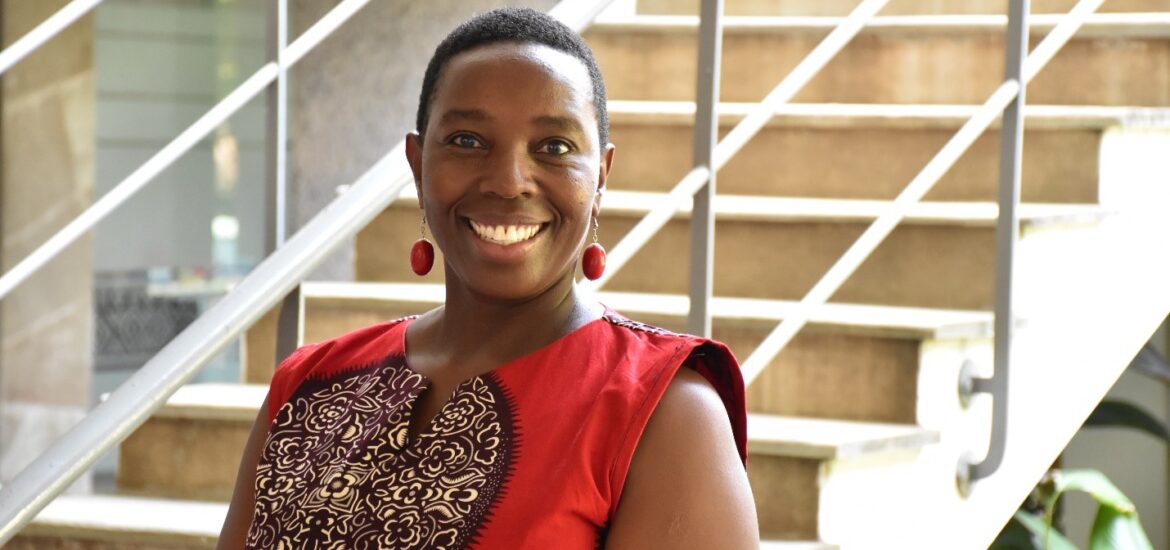
Championing Ethical Research: Dorcas Kamuya on Community, Science, and Women in Leadership
As the world marked International Women’s Day under the theme “Rights. Justice. Action. For ALL Women and Girls,” we spotlight the inspiring journey of Dorcas Kamuya, Head of the Health Systems and Research Ethics Department at the KEMRI-Wellcome Trust Research Programme. Her work sits at the intersection of science, ethics, and community ensuring that research not only advances knowledge but also respects the dignity and voices of the people it serves.
Dorcas’ path into research was not one she had envisioned early in life. Growing up in rural Kenya in a family of teachers, she was drawn to science out of curiosity and a desire to take on challenges. Her research journey began later when she joined the Programme to help establish its community engagement platform, an experience that shaped her career trajectory. Mentored by leading women in science and driven by a passion for meaningful impact, she went on to pursue a PhD and now leads one of the Programme’s core scientific departments.
In her role, Dorcas wears many hats, researcher, leader, mentor, and collaborator. Her work focuses on understanding the ethical, social, and cultural dimensions of research, particularly in areas such as emerging technologies, pandemic response, and vaccine equity. She also leads efforts to strengthen ethical research practices and build capacity by mentoring students and early-career researchers. Central to her work is ensuring that research addresses real-world health system priorities and is grounded in the realities of the communities it serves.
A defining influence in Dorcas’ career has been her early exposure to community-driven development. Witnessing firsthand how communities mobilise, problem-solve, and lead their own initiatives shaped her belief that community voices must be central to research. Today, she champions community engagement as a critical component of ethical research, ensuring that studies are relevant, culturally appropriate, and beneficial to those involved. This shift, now increasingly recognized globally, strengthens both the integrity and impact of research outcomes.
Like many women in research, Dorcas has navigated challenges ranging from limited representation and competitive funding environments to balancing professional and personal responsibilities. Yet, she emphasizes that progress is underway, with more women stepping into leadership and reshaping the research landscape. She credits mentorship, resilience, and intentionality as key to overcoming barriers and remains committed to amplifying underrepresented voices and supporting the next generation of women in science.
Dorcas’ research also explores ethical questions surrounding innovations such as bio banking and machine learning. As these technologies evolve, she highlights the importance of clear communication, informed consent, equitable partnerships, and fair benefit sharing. At a broader level, she challenges researchers and policymakers to consider whether emerging technologies promote equity and justice or risk deepening existing inequalities.
For young girls aspiring to careers in science and research, Dorcas offers a powerful reminder: this is a time of unprecedented opportunity. With more women leading across disciplines, she encourages them to use their voices, pursue their ambitions boldly, and believe in the validity of their dreams.
Dorcas Kamuya’s work is a testament to the power of ethical, community-centred research in shaping more inclusive and responsive health systems. As we celebrate women in science, her journey reminds us that meaningful progress happens when knowledge, equity, and community voices come together.